Reading List by Jennie for April, May and June

Read and reviewed: Last Night in Montreal, Lords for All Seasons, The Idiot (joint review with Sirius) and Uprooted
 The Children by David Halberstam
This was an informative and absorbing recounting of the early days of the civil rights movement as seen through the eyes of its youngest fighters. It follows such notable leaders as Diane Nash, Marion Barry, James Bevel and a number of others from the first attempts to integrate Nashville lunch counters through the Freedom Riders project and onto the voting rights drives in the Deep South that followed. It’s a big, often harrowing story, very well told. I gave it a B+.
AmazonBNKoboAREGoogle Play Store
 The Yellow Wallpaper by Charlotte Perkins Gilman
I first read this in high school, I think, but I recently came across it again and couldn’t remember if I had read it. Once I started it (it’s really quite short), I remembered it instantly. Hailed as a classic of feminist literature, The Yellow Wallpaper is also an incisive first person account at a woman’s descent into madness. The narrator is largely confined to her bedroom by her well-meaning but stifling husband (it’s implied she’s being treated with the rest cure for “hysteria”). She begins to believe that there is something sinister living in the wallpaper that covers the room. A lot of heavy themes are touched on in this haunting story; among them are Victorian repression, motherhood, sexuality and self-determination. My grade was a straight A.
AmazonBNKoboAREGoogle Play Store
 The Shameless Hour by Sarina Bowen
Reviewed by Kaetrin here. I thought this was a pretty well-done entry into the college/New Adult romance genre; I haven’t read any of the other books in the series (I haven’t read Bowen before at all, actually). I liked the pairing of the experienced heroine with the virgin beta hero, but was a bit perturbed that after setting Bella up as unashamed of her sexuality, the majority of the plot had to do with her being assaulted, abused and shamed for that very thing. Also, I did not think the wrongdoers’ punishment was sufficient. I’ve read a couple of new adult books in the past couple of years where heroines are assaulted, and in all of them the women adamantly refuse to pursue legal remedies. I really, really get why this happens in real life, but it doesn’t happen every time in real life, and I’d like to see a heroine who does choose to go the cops when she’s assaulted. Again, in real life, I don’t judge – there have been too many stories of women mistreated by the system, especially on college campuses, when they report a rape or assault. But it’s gotten to the point where I judge women in fiction a little bit, and so the heroine of The Shameless Hour frustrated me at times. Still, my grade was a B+.
AmazonBNKoboAREGoogle Play Store
 Sizzling Sixteen by Janet Evanovich
Sigh. I can’t believe I’ve read 15 (now 16) of these books. I really rather enjoyed the first maybe, half-dozen? Then I got into a rut that I can’t seem to get out of where I start reading one (I had a bunch of them in paperback that a friend had sent me, and then I bought a bunch digitally when they were on sale ), and would wonder why I was reading it. They’re so stupid. Every one is the same, it includes the same observations about any number of characters, and Stephanie never. learns. anything. At one point in this one Stephanie and Lula manage to lose their skip for the SECOND time by leaving him in the car by himself while getting fast food, and I just got so irritated I wanted to quit the book then and there. I get that it’s supposed to be broad humor but I don’t even think the books are funny. I also get that the things that irritate me are also probably the things that other readers like – everything is very familiar and nothing ever really changes. The weird thing for me is that always, at some point the story clicks for me and I get drawn into the comfort and the familiarity of the world Evanovich creates. It still irritates me, but it’s the irritation you feel at someone you otherwise like, sort of a fond aggravation. I honestly can’t say if I want Stephanie to change or not (though I could do without hearing everyone’s backstory for the 17th time). I gave this a B-. I’ll probably read the next one at some point.
AmazonBNKoboAREGoogle Play Store
 The Good, the Bad and the Furry by Tom Cox
I’ve been a fan on social media for a while now of British author Tom Cox, who writes about his cats, rural life and other things (including golf, ugh). I first became aware of him through his @mysadcat Twitter account, which is all about his 19-year-old cat The Bear, who is (or rather looks) very forlorn pretty much all the time. Unfortunately, none of his books were published in the U.S. until The Good, the Bad and the Furry came out here recently. So of course I bought it. It’s full of sweet, funny and incisive musings about the author’s life, his parents (his dad is hysterical), home ownership, relationships, and yes, cats. I gave it a B+ and will definitely be keeping an eye out to see if his other books are published in the U.S. (yes, I know I could get them shipped, but I’m such a Kindle girl these days).
AmazonBNKoboAREGoogle Play Store
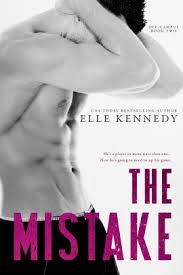 The Mistake by Elle Kennedy
Reviewed here. As with most of the college-set New Adult books I’ve read, this was very absorbing and readable. The thing that kept it from being a higher grade for me (I gave it a B) was that in spite of the fact that the virgin heroine was portrayed as being very sex-positive, not prudish and fairly comfortable/familiar with everything leading up to P-in-V intercourse, there were still a lot of subtle (and not-so-subtle) negative portrayals of “puck bunnies” and slutty college girls without self-respect who are used and discarded by the hero and his hockey-player friends. For all that I think they’re usually better written and more complex than the average, say, HP Presents, a lot of these college-athlete-New-Adult books still seem pretty reductive in their gender roles. The heroes are usually athletes, hyper-masculine and promiscuous until the heroine comes along and redeems them. The heroine may or may not be virginal and innocent, but she is almost always contrasted with the other young women in the story – with the exception of past or future heroines – who often come off as trashy, catty and shallow. I’d love to see more natural depictions of college life and heroines with good female friendships, and if the female friends (or even the heroines themselves) go to a frat party or a club and wear something short and tight, I don’t want it to be depicted in such a way that I feel I’m supposed to judge or pity her.
AmazonBNKoboAREGoogle Play Store
 The Awakening by Kate Chopin
I think this was the story I was thinking of when I picked up The Yellow Wallpaper. I guess I’m on a classic feminist literature kick. Unlike The Yellow Wallpaper, I hadn’t read The Awakening before. This one was a long short story, or perhaps novella length, set shortly before the turn of the 19th century. Edna Pontellier is a young wife and mother vacationing on Grand Isle, Louisiana with her Creole husband Leonce and their two sons. Edna is restless and discontented in her role, and forms an attachment to Robert Lebrun, a young single man who is also staying at Grand Isle. The story continues in New Orleans, where Edna lives with her family. Robert has left for Mexico, ostensibly to seek his fortune but really to stay away from Edna and their doomed relationship. Edna begins to kick off her traces, starting an affair with a lothario, but ultimately the stifling rules of society dictate that her attempts at freedom are doomed. I’ll admit that I didn’t always like Edna; her childlike selfishness didn’t make her sympathetic. But I appreciated in a larger sense that she was never given a chance to make any choices for herself, and the story was haunting and evocatively told. My grade was a B+.
AmazonBNKoboAREGoogle Play Store
 The Great Movies by Roger Ebert
I still miss Roger Ebert, who died in 2013. He and Gene Siskel were staples of my childhood, and his latter-day presence on Twitter, after he’d lost the ability to speak, was warm, smart and genuine. When I saw this book on sale I snapped it up, figuring that I’d love Ebert’s writing as much as I loved Ebert. Well, yes and no. I’ve enjoyed the book, but it’s a bit much to read 100 essays on movies that I haven’t, for the most part, seen. Sometimes, Ebert’s enthusiasm is infectious and I think “I have to see this film!”; at other times, it’s a little bit like being trapped in a cocktail party conversation with someone who is raving about Prague, which I’ve never been to. Additionally, a lot of the movies Ebert writes about (maybe most of them) are pretty high-brow, which makes sense on a “greatest films of all time” list. Now, I tend to have fairly sophisticated tastes in cinema-going (my Easter 2010 sojourn to Hot Tub Time Machine notwithstanding), but reading essays about highly philosophical, metaphorical and esoteric Japanese films that I’ve never seen and will likely never see is not my idea of fun, exactly. That said, Ebert is a compelling writer and his humanity – what made him so relatable as a reviewer and critic – shines through. My grade is a straight B.
AmazonBNKoboAREGoogle Play Store
 Shards of Hope by Nalini Singh
Reviewed here. Eh. I don’t know. My relationship with this series has stalled (or maybe it wasn’t that strong to begin with?). The things I like about the books (the world is well-imagined, even if I can never quite visualize the PsyNet; the stories have a certain compelling quality that moves them forward) are the same in every book. The things I don’t like are the same, as well: the animalistic changelings are the Good Race and the cold, intellectual Psy are the Bad Race. The only way the Psy can get better as a race or as individuals is to be more like the Changelings, who are presented as perfect, if not as individuals, at least as a society or societies. I don’t care if these are cheesy books about leopards who shift into human form; the idea of a master race continues to give me the heebie-jeebies. Also, I get so sick of how “-est” each heroine and especially hero is. The tortured character (usually the hero but sometimes the heroine) is the most tortured character ever. The heroes are all the most macho, the best at being a changeling or a Psy or whatever. The Psy heroes/heroines continue to not just be good at whatever their Psy talent is but the best, the most unusual and special Psy out there. The women are fierce, unless they are healers or empaths, and then they’re the gooeiest and sweetest and most nurturing heroines EVAH. Even a heroine like the one in Shards of Hope, Zaira, who is honestly dangerously violent and unhinged (and who suffered, as a child, the most over-the-top mistreatment I may have ever read about), is ultimately portrayed as being in the right because she only beats people to death who deserve it. This ignores the fact that she almost attacks a changeling who (barely) flirted with her mate (he stops her), and almost beats to death a human who made her angry. I don’t like the pro-vigilante message in the books or the simplistic black-and-white, good-vs.-evil conflict that’s set up. Lip service is given to many of the characters (usually Psy) being morally ambiguous but the way they’re portrayed it’s more like they’re tough on the outside but marshmallows on the inside. That said, I’ll probably keep reading the series and ultimately my grade was a B-. At least they aren’t boring.
AmazonBNKoboAREGoogle Play Store
 Younger by Suzanne Munshower
I got this through Amazon Kindle First program. I don’t usually read suspense, but it sounded interesting enough and hey, a free book is a free book. It opens a bit confusingly, in the middle of the action; Anna Wallingham is preparing to flee her flat in London, when her boss Pierre Barton shows up, they have a brief, opaque conversation, and Pierre promptly falls ill and drops dead. The book then backtracks to several months earlier; Anna is a 57-year-old publicist in Los Angeles who abruptly gets fired from her one big client. Pierre Barton swoops in and offers Anna an opportunity to be a guinea pig for a product Barton Pharmaceuticals is producing: a line of facial products designed to take decades off of one’s appearance. Anna is skeptical, but desperate for the money Pierre offers, so she goes for it. Again, I don’t read much suspense, but I was a little disappointed at the lack of twists and turns in this one – with one exception, there were few surprises as to who the bad guys were. Anna spends a fair amount of time musing about society’s treatment of older women and the value of being (or appearing) young. Some of these observations were trite, while others were actually pretty insightful. I ended up giving this a B; it would probably be a low B, closer to a B-, but it is fairly readable and decently written.
AmazonBNKoboAREGoogle Play Store

That was my biggest problem with The Shameless Hour and especially after the way Bella was introduced in The Understatement of the Year, and after the plot of Blonde Date, which ran along similar lines, it really bothered me. I also agree about the wrongdoers’ punishment, and it bugged me that the relationship was always about Rafe being there for Bella during bad times (even in the epilogue she had a cold and he brought her orange juice), without much of Bella being there for him. And I think it was Cleo who said that Bella’s career choice didn’t feel right for her, and I agree with that too. Still, the book was so enjoyable to read — Sarina Bowen’s voice is really appealing — and I loved Bella, so I gave it a B-. If you’re looking for a heroine who goes to the police after an assault, there’s one in Elle Kennedy’s The Deal.
Re. the Psy/Changeling series, I really think you should switch over to Nalini Singh’s Guild Hunter books. That world is a lot easier to visualize and there’s no one race portrayed as better than the others. Some of the other problems you describe are there — the books have powerful, special heroes and heroines– but that series feels fresher. After fourteen or fifteen books, the Psy/Changeling series is starting to feel too familiar.
I have The Great Movies in the TBR pile; it is good to hear you liked it. I loved Ebert too, and his writing voice is so personable and as you say, human. I had another of his books once and loved to read his reviews.
I am pretty much over the Psy-Changeling series. It all feels repetitive and on a train heading to nowhere marked by endless pair ups. I prefer the Angels series by a wide, wide margin.
@Imani: That’s a great point. The angel / Guild Hunter books have a strong sense of direction, with the looming Cascade, while the main conflicts of the Psy / Changeling series are almost all in the rear view mirror.
I miss Roger Ebert’s movie reviews and the blog he used to have. I think I made it to about book 6 or 7 of the Plum series and got tired of the repetition even then. What I’ve heard about the stagnation of the series in the years since hasn’t made me interested in picking it back up.
I wasn’t a huge fan of the latest Psy/Changeling book, but I am not ready to give up on it yet. I do like that she is having the Psy have adjustment issues to what is essentially a seismic change in their society. And not everyone is happy about it.
Also, I never saw the Psy as ‘bad’ per se. But just they were contrasted with the somewhat Utopic Changelings. The Psy honestly are what sold me on the series in the beginning. They were the most fascinating aspect of the series since they felt like the more alien race of the three presented. No surprise then that my favorite of the books are the ones the concentrate more heavily on the Psy (this one nowithstanding).
And finally, SIngh continues to be one of the mainstream writers that makes an effort to really diversify her casts. So it is nice to continue to hang out in her world.
I had similar issues with Shameless Hour – and as Janine said, I really didn’t buy Bella’s career switch.
But enough with the assaulting and the slut shaming. It’d be SO nice to read a romance where the heroine is unapologetically, aggressively sexual and doesn’t have to pay some sort of narrative price for it.
I’m still all in with the Psy/Changling series although I’m starting to get series fatigue. I’m ready for this “season” to wrap up.
@Tina – I agree about the Psy – I came for the sexy shape shifters but I stayed for the Psy and their struggles. They’re the most interesting to me too. I still really like her world building and the diversity is great (except for the lack of LGBTQ characters, but I’ve graciously decided to keep reading despite that).
@cleo:
I am on tenterhooks (as they say in Regency romances) waiting to find out whether Singh will go the M/M route with Illium and Aodhan in the Guild Hunter series.
@Janine: I wondered (briefly) if she might with Aden and Vasic. I saw her speak when she was on tour promoting Heart of Obsidian, and she mentioned that she got a lot of Aden/Vasic requests and kind of joked about it, but I definitely got the feeling that that wasn’t going to happen (and it didn’t).
@Janine: Thanks for the advice – I may try Singh’s other series. OTOH, I’m wary of starting series these days, particularly ones that already have a lot of books in them.
@Imani: Hmm, another vote for Singh’s other series. Well, that does give me something to think about.
@Tina: I do appreciate the very ethnically diverse characters Singh creates.
I tend to find the Psy more interesting than the Changelings, too, maybe because they at least face challenges they need to overcome whereas the Changelings may have romantic issues to work through, but are otherwise perfect in every way.
But really, I can’t be the only one who thought Zaira was seriously unhinged. I didn’t like the sort of “she’s a good person underneath it all” because it seemed to sweep under the rug how clearly damaged she was by her abuse. I don’t know; it felt a little akin to a “pull yourself up by your bootstraps” message wherein a person can overcome anything by wanting it enough.
@cleo: The thing was, I understood why Bella was ashamed after what happened to her (I mean, I didn’t think she needed to be, but I understood it). It didn’t really change her character that much – she didn’t suddenly learn some lesson about how she should be a good girl and not sleep around, and she was still pretty aggressive with the hero. But I still resented the author for going there with the plot. It felt cheap and unnecessary.
@Jennie:
Yes. Exactly how I felt.
@Janine: I meant to also say, I hope you don’t go into a decline waiting to see what happens with Illium / Aodhan. (I do love using regency romance language – it’s most agreeable).
@Jennie:
Oh completely agreed about Zaira. Main objection with this book was her. I wrote a review and in it I talked about my exasperation with the usage of the word ‘rage’ to describe Zaira. It was quite literally used @90 times in the course of the book. She was a rage monster. And it was annoying. I didn’t ever warm to her.
And I agree with the wish that Singh had gone the Aden/Vasic route. Even though I ended up really liking Ivy/Vasic. I felt a smart part of me sigh when I realized we wouldn’t get A/V. At least with Singh you don’t get the sense that she is being coy or stringing you along or trolling you with a hoped for couple only to pull a bait & switch. So I never, ever got the sense she was gonna go there with Aden/Vasic, but it was just a personal hope.
@cleo: I get the sense that Singh is a pretty traditional author when it comes to gender roles, generally. I didn’t really expect Aden/Vasic but I just finished an ARC of Archangel’s Engima and while I won’t spoil anything, there was a scene with Illium and Aodhan that could very easily be read as romantic whether or not it was intended that way.
@Jennie and @Tina: One of the reasons I actually did like Zaira is that there was (unusually for Singh) a gender role switch with her and Aden–usually it’s the hero who is the emotionally wounded badass and the heroine is the healing force in his life, as Aden was for Zaira. Would Zaira’s anger have bothered you guys equally had Zaira been the guy in the romantic relationship? Women aren’t usually permitted to be angry the same way men are.
I have the same issue with the Psy/Changeling series that you do. I know some people love it but I never could get into it, and I tried for like six books!
@Janine: @Tina: I also feel like Nalini Singh is too traditional to write a same sex couple as her main couple. But I’d love to see a little more representation – a gay neighbor, a lesbian aunt, whatever. I think it was Kiss of Snow when I realized that in 10 books, set in and around SF, with a cast of hundreds, it was really odd there were no mentions of LGBTQ people at all. I think she did finally mention a same sex changeling couple and that made me happy.
@Janine: @Tina – yeah, I don’t really expect her to ever write a same sex pairing as a main couple but it’d be nice to get something, even just a gay neighbor or a lesbian aunt.
Re: Zaira – I’ve been bothered by some of the other unhinged, angry (male) characters – especially Kaleb. I do see the gender flip, but my biggest problem with her character had to do with my dislike of the way mental illness is portrayed in this series.
hmm – I think my comment was eaten
argh – sorry for the multiple posts
While some of the romances haven’t worked as well as others, I love the Psy/Changeling world and there are so many secondary characters I would like to read more about I know she won’t get to them all. I’m with Janine, one of the things I enjoyed most about Shards of Hope was the role reversal.
Most of my favorite characters are Psy, so maybe I read too much into the text. But I’ve never seen the Chagelings as perfect or better than the Psy (other than the issues with Silence). One of the other nice things about the book was the bad guys we’re from all three groups.
There is a named lesbian couple in Kiss of Snow (Psy/Changeling # 10), Simran and Ines. They have a little scene in which they interact (Simran is badly injured and in the infirmary). But yes, LBGTQ people are not frequently mentioned in the series.
I prefer the Psy/Changeling series to Guild Hunter, which I find harder to get lost in. Maybe too far over urban fantasy line for me? Maybe vamps and angels less my thing? I’m not sure.
@Janine:
Nah, the gender flip doesn’t bother me. Ilona Andrews’ Kate Daniels started off isolated, nihilistic and very violent and I loved her from jump. I think my issue wth Zaira was her anger & rage didn’t feel *a* character trait for her, it felt like *the* character trait for her. There was a repetitiveness in the writing about it. Also, Zaira seemed so consumed by her own thoughts of it. It was a relief when I got out of her head when the POV shifts back to Aden or when the action becomes more plot based.
@Janine: I appreciated the gender-switch but felt that Zaira was shown through her actions to be really too unstable and I didn’t like the message that love would somehow heal her. Maybe because a lot of romance heroes (and some heroines) are presented as being “healed by love” but it’s different when they are simply unhappy or self-destructive, as opposed to violent and dangerous.
@library addict: It’s interesting to me when people say they don’t see the Changelings idealized because it’s *such* a big issue for me. I mean, there are individuals in all three groups (though humans are mostly non-entities in Singh’s world) who are bad but in terms of the societies as a whole Changelings seem very strongly idealized to me. (Especially, obviously, in contrast to the Psy, because they are in many ways polar opposites – thinking vs. feeling, but even without the Psy I would say that the Changeling societies are presented as Utopian.)
@Tina: I felt Zaira had other facets than just her rage– her love for Aden, her loyalty to the Arrow squad, and even her fear of getting her interactions with Jojo, the little changeling girl, wrong. But with that said, she thought about her anger issues a lot, and we saw her having them, too, so I can understand why she struck you the way she did.
@Jennie: That’s a fair point with the healing by love. I had that issue with Vasic in the previous book.
I’m still mourning Roger Ebert myself. Thank you for including his work.