REVIEW: Vet at the End of the Earth: Adventures with Animals in the South Atlantic by Jonathan Hollins

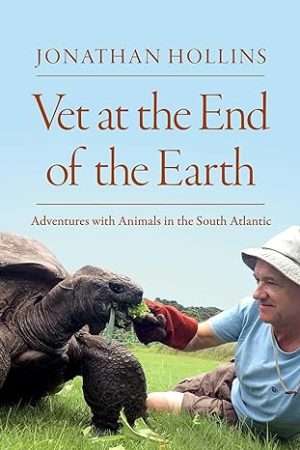
The passionate story of a vet’s care for all creatures great and small in the colorful, diverse, and distinctive South Atlantic islands.
The role of a resident vet in the remote islands of the Falklands, St. Helena, Ascension, and Tristan da Cunha encompasses many wonderful complexities: caring for the world’s oldest living land animal (a 200-year-old giant tortoise, denizen of the St. Helena governor’s lawn); pursuing mystery creatures and invasive microorganisms; relocating herds of reindeer; and rescuing animals in extraordinarily rugged landscapes, from subtropical cloud forests to volcanic cliff faces.
Hugely entertaining and affectionate, Jonathan Hollins’s tales of island vet life are not only full of ingenuity and astounding fauna—they are also steeped in the unique local cultures, history, and peoples of the islands, far from the hustle of continental life.
Come join Jonathan on his daily adventures with these alluring and fascinating creatures.
Review
Eminently readable, well written but at times not for the faint of heart. I’ve read a variety of non-fiction books written by veterinarians and jumped at the chance to review this one. Hollins’s account of his time in the Falklands and St. Helena is definitely different from any other. The book is sort of a hybrid travel guide to these remote places as well as about the various animals there – both native and introduced by man.
Hollins is dedicated to his profession and to caring for animals. Sometimes, well actually a lot of the time, this leads to said animals needing euthanasia. Don’t get me wrong. I know this is hard on the vets and staff and is done to end animal suffering but wow, there is a lot of it in this book. Hollins is faced with potential outbreaks of diseases that could spread to wildlife across the island of St. Helena and possibly humans as well so this is definitely not all fluffy bunnies.
He matter of factly describes the good with the bad: saving a laboring cow after the death of the calf during delivery, the icky body fluids and mud that vets must become accustomed to working in, post mortems, and (briefly) the hell of the early 2000s hoof and mouth outbreak in the UK. So fair warning that, again, this isn’t all cute kittens and puppies.
I had hoped for more time to be spent with more exotic animals but a lot of his time is spent caring for domesticated livestock that have challenges in this environment as well as imported reindeer – yes. The Patagonian toothfish and tortoise are cool, though. So a lot of the book is more about a veterinarian in this part of the world rather than a vet at work in this part of the world. B-
~Jayne
AmazonBNKoboBook DepositoryGoogle

If the book didn’t mention, Patagonian Toothfish is also known as Chilean Sea Bass. I have seen one intact, and it is toothy and fierce-looking! Also delicious, according to the in-laws. I stuck with the potato salad, myself.
@LML: The author mentioned that “Chilean Sea Bass” is (among other names) the made up term used for this fish. I’ve seen pictures too (just had to look them up after reading the real name) and yes, yowza so many teeth. Hollins said that the fish flesh is naturally oily (due to the fish living in deep, cold ocean water) which is why it tastes so good. If I were looking at a menu and had to choose between Patagonian Toothfish or Chilean Sea Bass, I’d sure go with the second option! ☺